

Details:
Technology Used
- Ansys Discovery, Ansys Fluent
Objective:
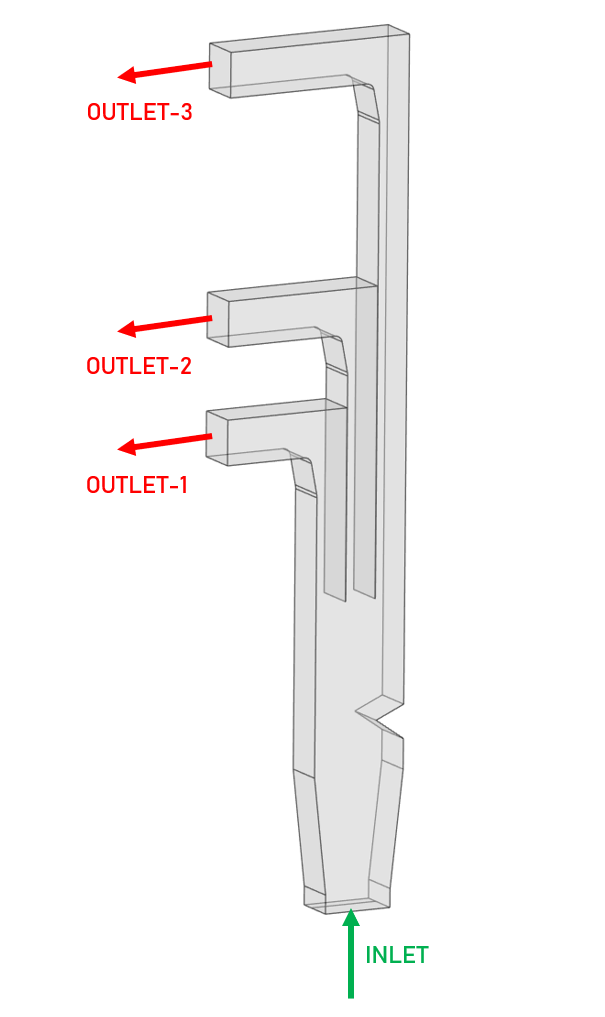
Evaluate PF duct performance and optimize duct entries to achieve balanced fuel delivery across all burner fingers while maintaining stable overall flow dynamics.
Challenge:
The existing PF duct design resulted in uneven fuel distribution, causing imbalances that could lower combustion efficiency, create localized hotspots, and shorten component lifespan. The challenge was to identify modifications that improved fuel balance without disrupting the overall flow behavior.
Solution:
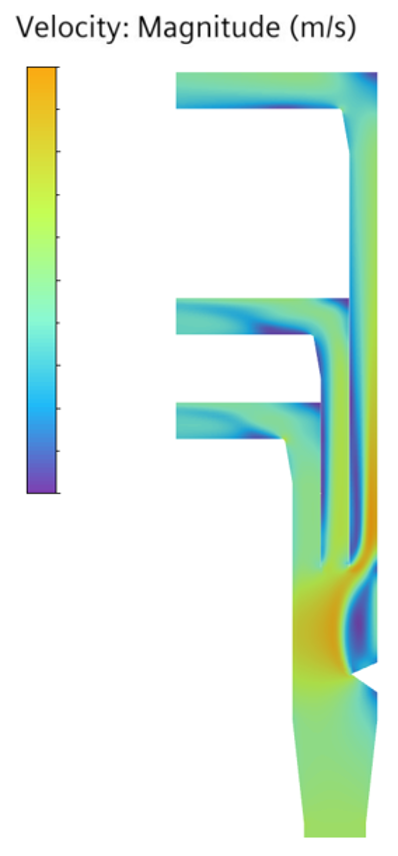
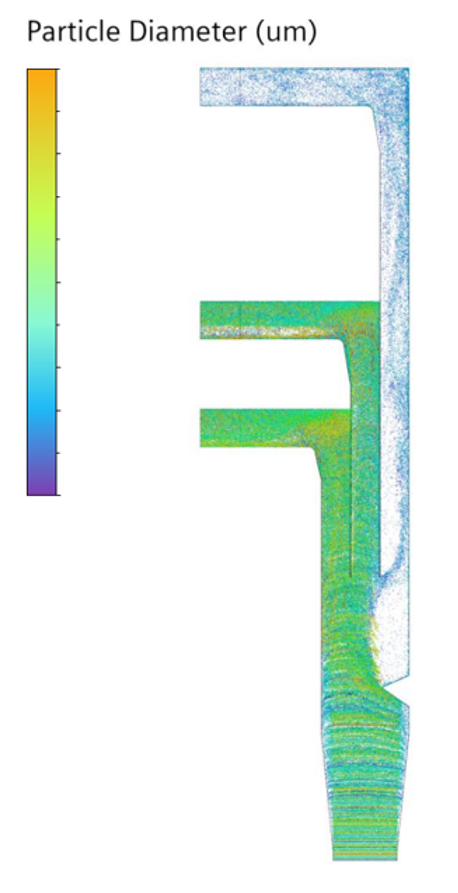
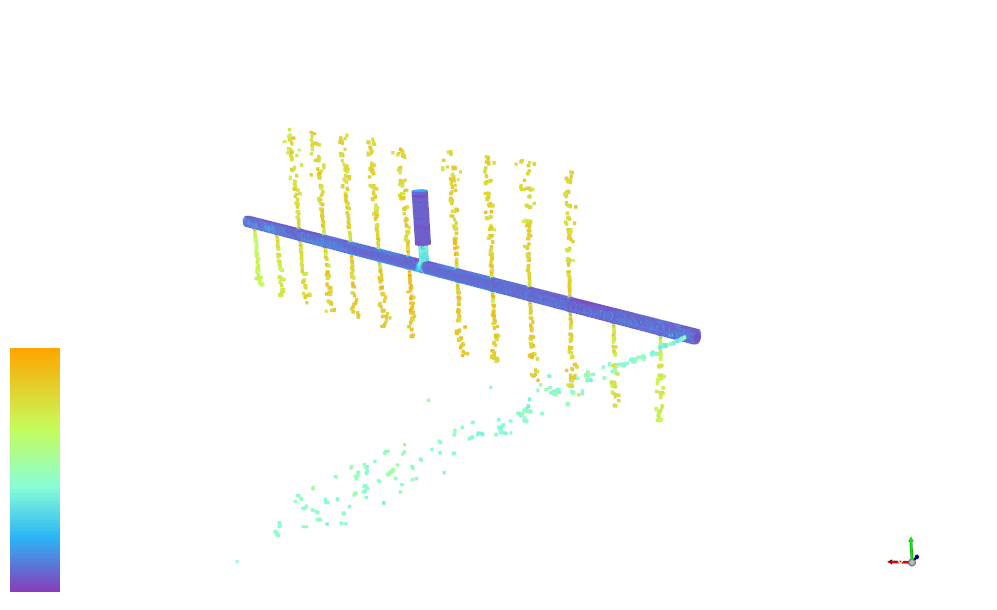
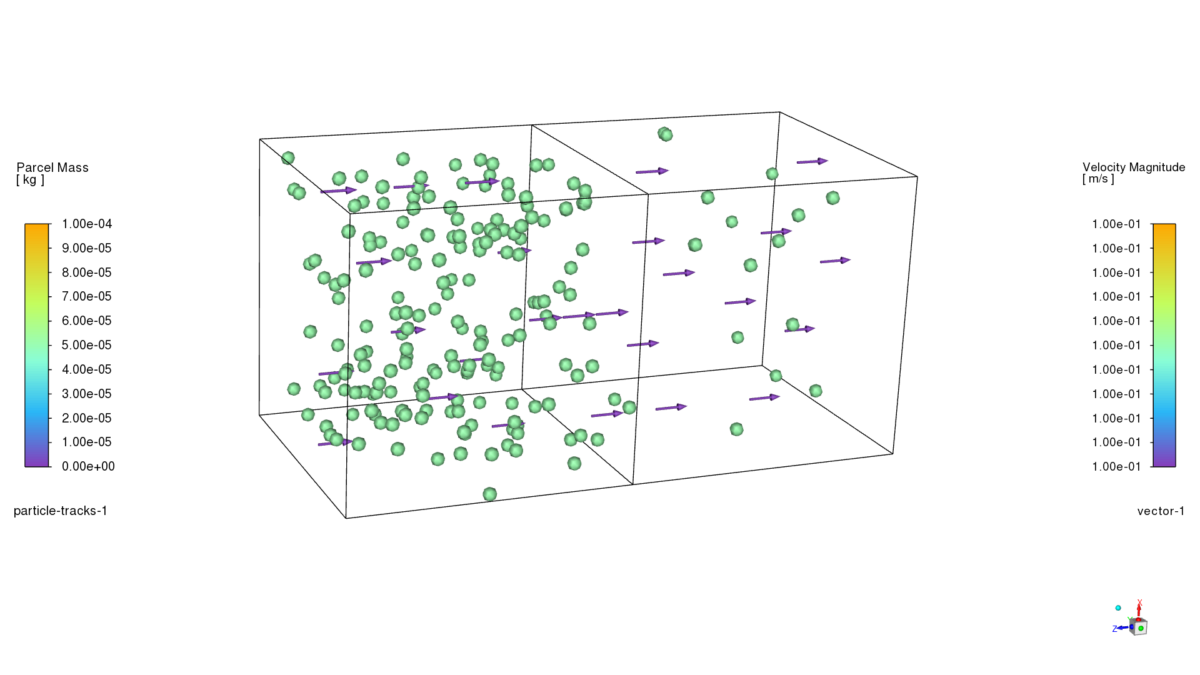
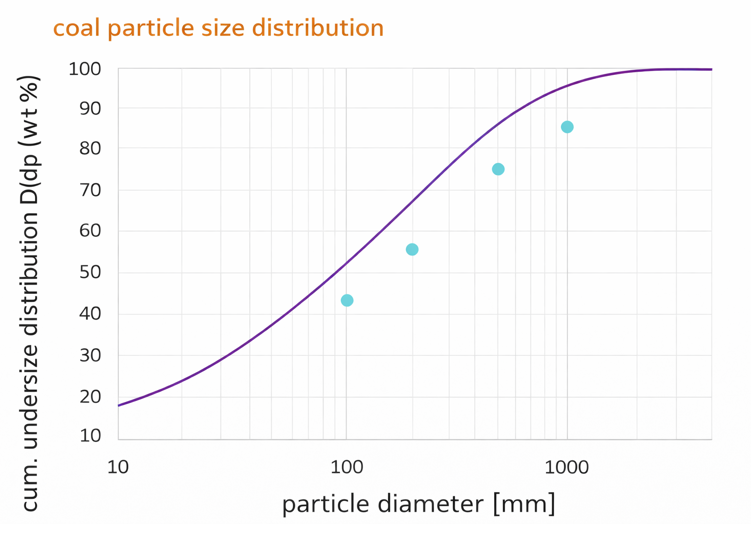
A detailed 3D CFD model of the PF duct system and burner fingers was developed using full operational and geometric data. Two-phase Euler-Lagrange simulations accurately captured gas-solid interactions, incorporating real particle size distributions via the Rosin- Rammler model and inhomogeneous coal inlet conditions. Baseline simulations of the existing duct design were compared with modified configurations to analyze gas and coal distribution patterns. Sensitivity analyses across multiple coal mass flow rates, including 100% and 75% conditions, ensured robustness of the optimized design. The final modifications reduced coal mass flow deviations per burner finger to a satisfactory range, achieving more uniform fuel distribution and stable flow behavior.
Conclusion:
The optimized PF duct design successfully balanced fuel delivery across all burner fingers while preserving overall flow stability. This improvement increases combustion efficiency, reduces hotspot formation, and extends component life, providing a reliable and effective fuel distribution solution.