

Details:
Student Team
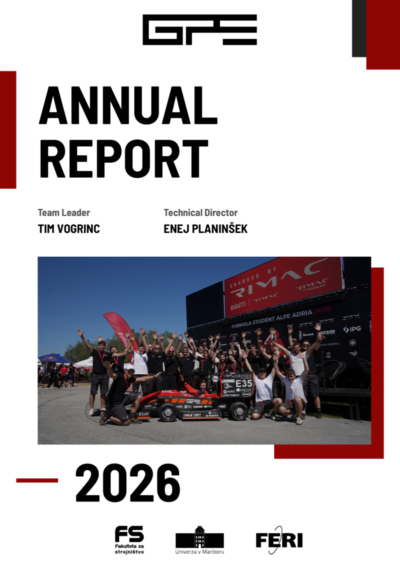
UNI Maribor Grand Prix Engineering (GPE)
Technology Used
Ansys Fluent, Ansys Discovery, Ansys Mechanical
Student team:
UNI Maribor Grand Prix Engineering (GPE) is a Formula Student engineering team from the University of Maribor, Slovenia.
The project:
UNI Maribor Grand Prix Engineering Optimizes Electric Race Car Performance with Ansys
In Formula Student racing, every engineering detail matters. From aerodynamic downforce and motor cooling to lightweight suspension components, simulation helps teams make informed design decisions before manufacturing.
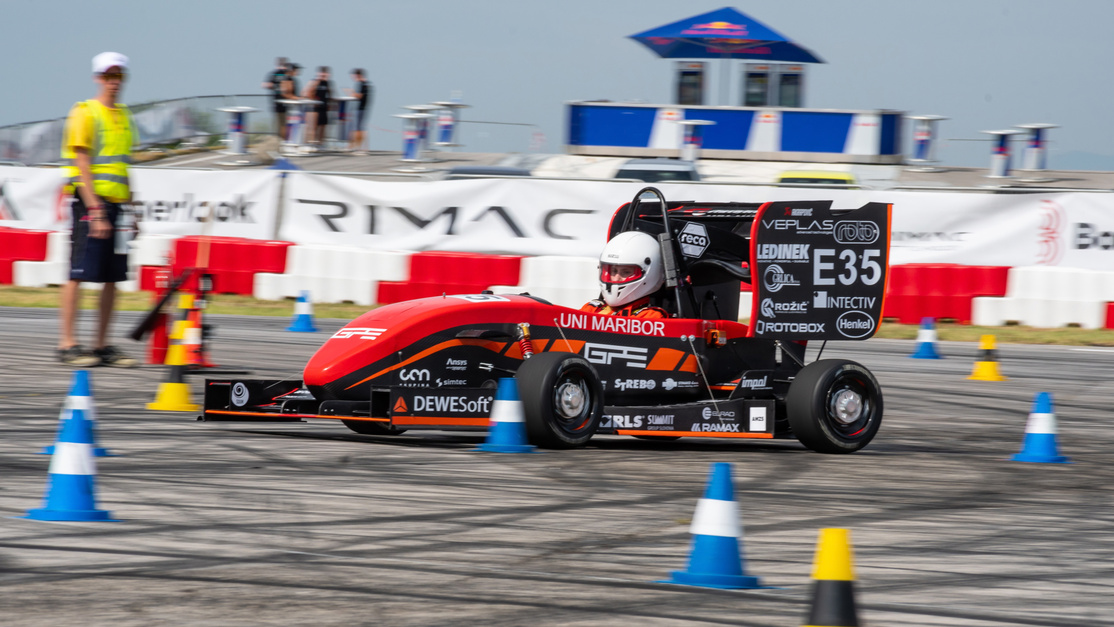
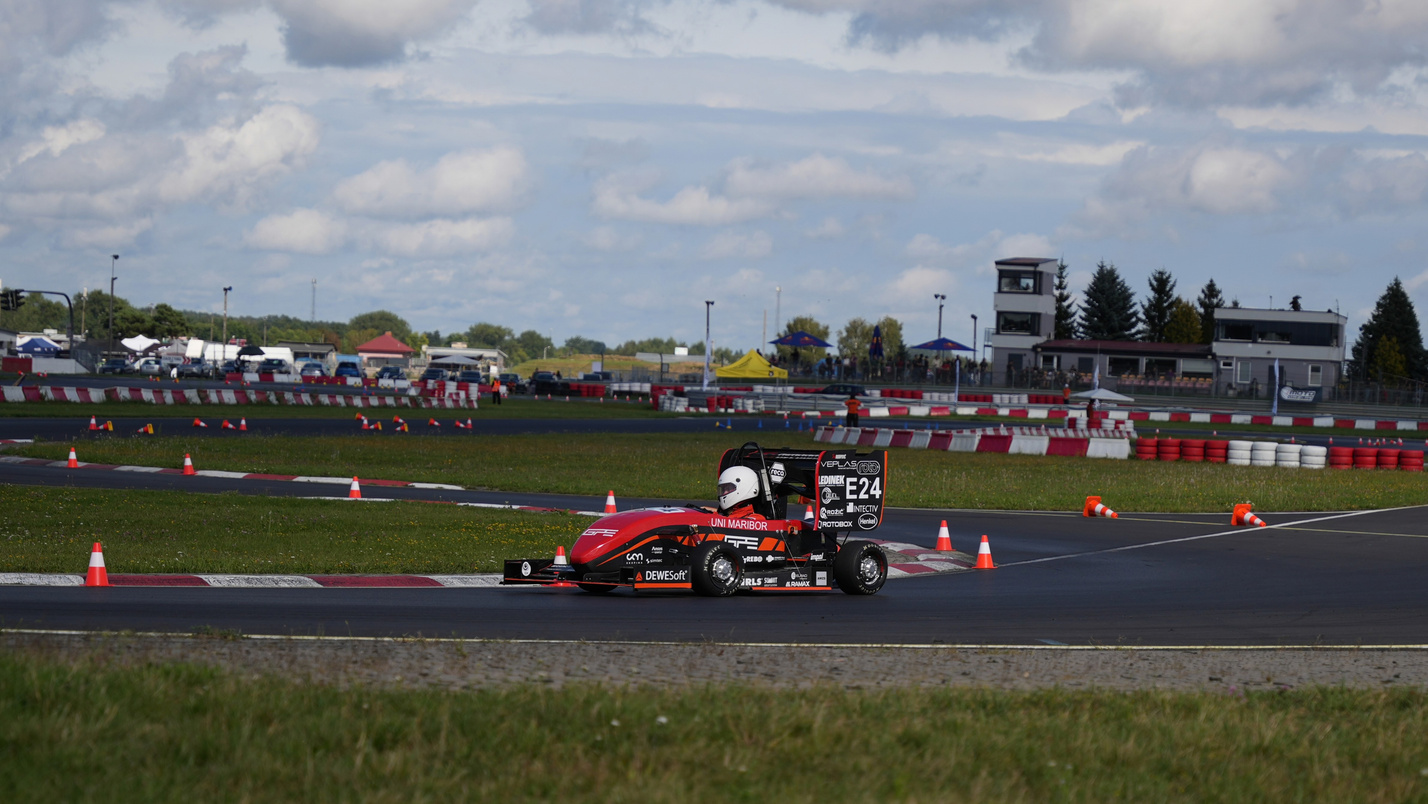
UNI Maribor Grand Prix Engineering (GPE), an 87-member student team from the University of Maribor, Slovenia, developed its fourth-generation electric race car, GPE26 (Roxy), featuring four air-cooled in-wheel motors, a custom inverter, a 600 V battery system, and torque vectoring.
With support from Simtec and Ansys simulation software, the team improved its aerodynamic CFD workflow, investigated electric motor cooling, and optimized suspension components for performance and manufacturability.
Key Results: Simulation-Driven Race Car Development
-
11.9% CFD prediction deviation: Improved aerodynamic correlation with track measurements, compared with 25.3% using the previous simulation workflow.
-
~10% more predicted downforce: Adjoint optimization identified an improved underbody geometry, intended for future implementation.
-
~130°C maximum predicted motor temperature: Thermal CFD analysis confirmed sufficient fan-driven cooling for the modelled heat load.
-
Two endurance races completed: GPE26 successfully finished both endurance events at Formula Student Alpe Adria and Formula Student Poland.
Improving Aerodynamic Accuracy with Ansys Fluent
Formula Student cars spend much of their time cornering, making accurate predictions of aerodynamic forces essential for vehicle performance.
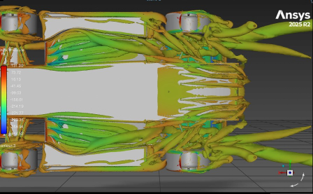
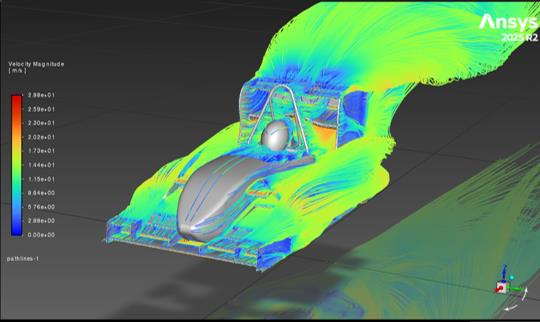
Using Ansys Fluent and Ansys Discovery, the team investigated airflow around the vehicle, analyzing downforce, drag, side forces, and aerodynamic moments under different driving conditions.
For GPE26, the team rebuilt its full-vehicle CFD workflow using Ansys Fluent 2025 R2, replacing the Ansys CFX-based methodology used in previous seasons. Approximately 90 three-dimensional simulations supported aerodynamic development, mesh validation, and design comparisons.
The new workflow was validated against track measurements from the GPE25 vehicle. Measured downforce was 394.1 N, compared with 440.8 N predicted by Fluent - an 11.9% deviation, significantly improving on the previous CFX result of 25.3%.
The team also explored aerodynamic behavior during cornering. In one simulated scenario, downforce decreased by 12.9% compared with straight-line driving, providing insights into aerodynamic load redistribution. These cornering results remain subject to future track validation.
Predicting 10% More Downforce Through Adjoint Optimization
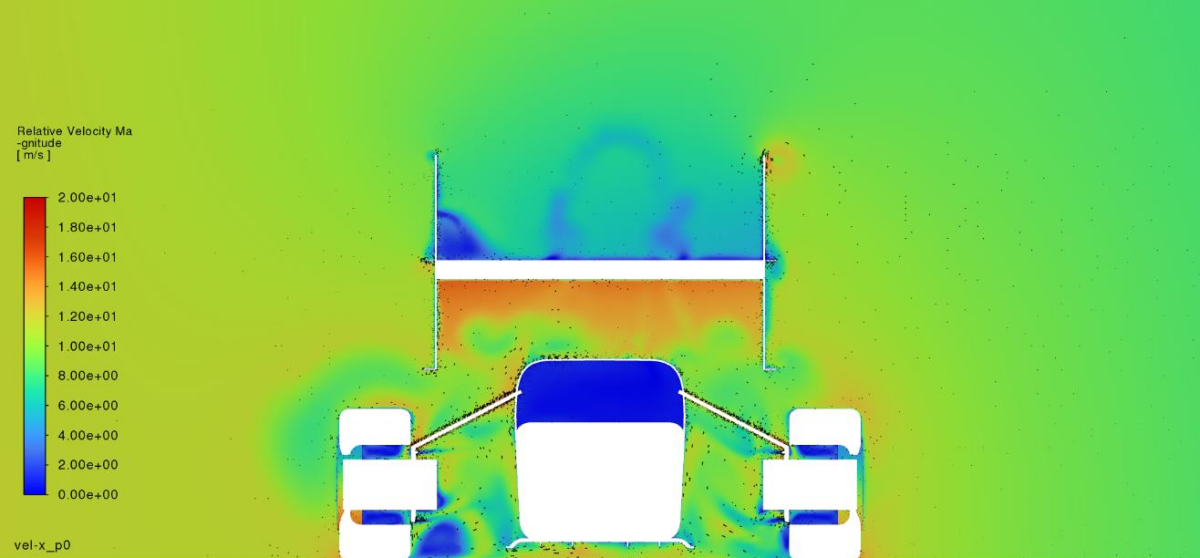
Building on its improved CFD methodology, the team applied the Ansys Fluent adjoint solver to optimize an underbody vortex generator.
Instead of evaluating only manually designed alternatives, the adjoint method identified where geometry modifications could improve the airflow structures responsible for generating downforce.
The optimized geometry is predicted to generate approximately 10% more downforce than the baseline design.
Although the component has not yet been manufactured or tested on track, the team established a repeatable optimization process that can support future aerodynamic development.
Optimizing Electric Motor Cooling with Ansys Fluent
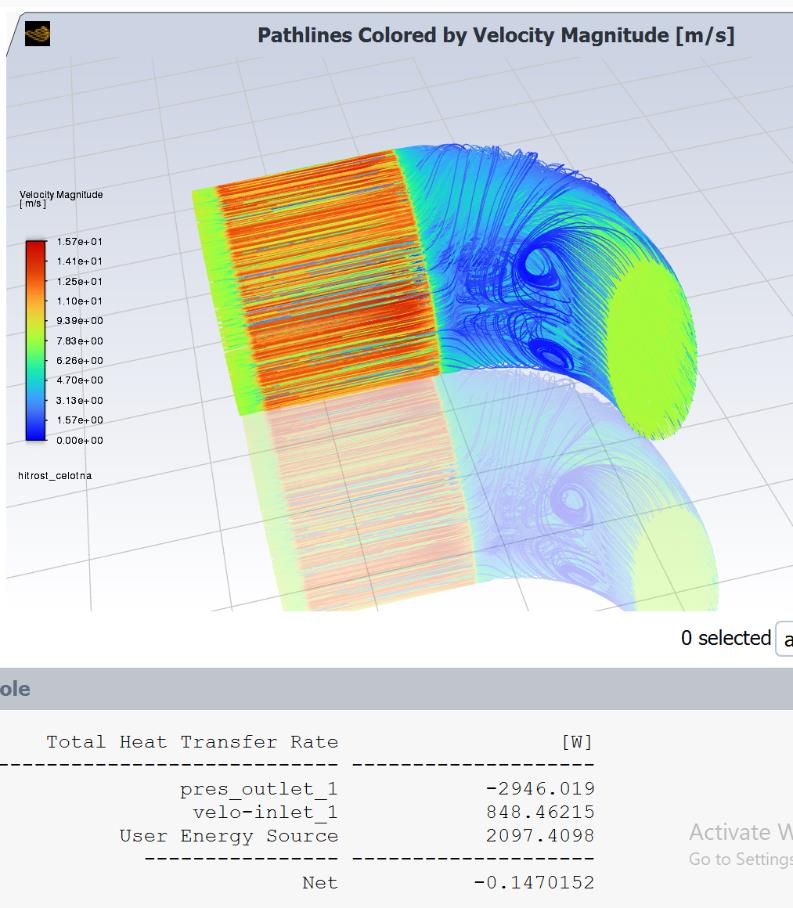
The GPE26 uses four air-cooled in-wheel motors, eliminating the need for a radiator or liquid cooling circuit. However, ensuring sufficient heat removal within the limited space inside each wheel was a critical engineering challenge.
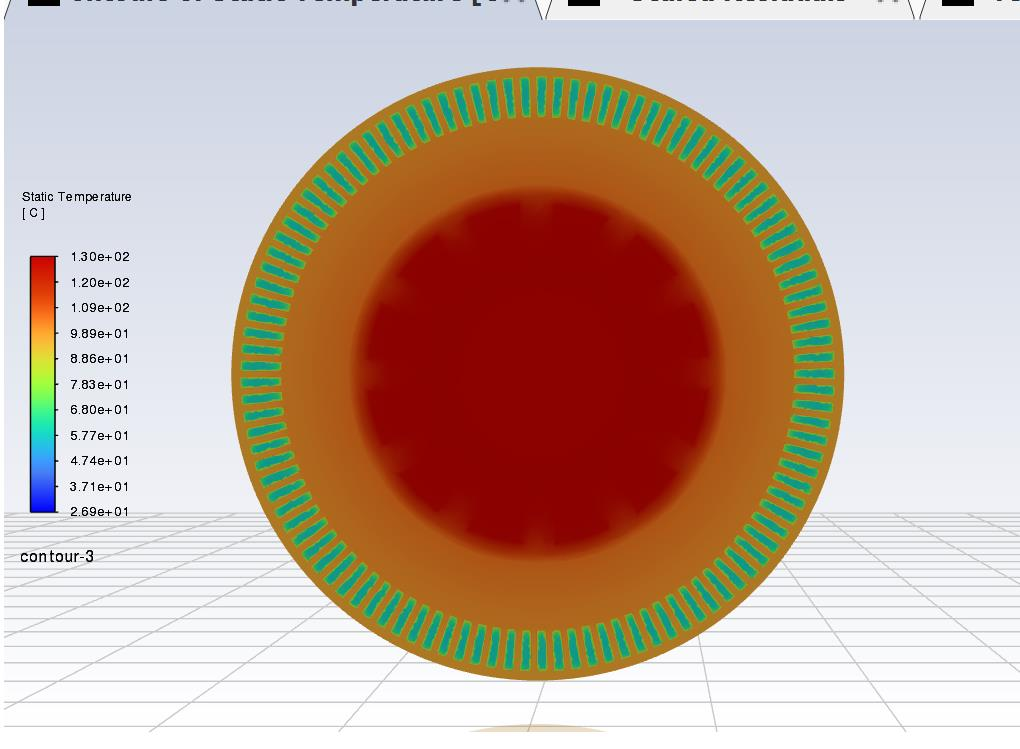
Using Ansys Fluent, the team simulated airflow and temperature distribution inside the motor, accounting for approximately 2.1 kW of modelled heat losses.
The simulation predicted a maximum motor temperature of approximately 130°C, confirming that fan-driven airflow could remove the modelled heat load. Results were also compared with a simplified model, showing a deviation below 15%.
These findings helped the team assess its compact cooling design before physical testing.
Lightweight Suspension Design with Ansys Mechanical
Suspension uprights must withstand braking, cornering, and vertical loads while minimizing unsprung mass.
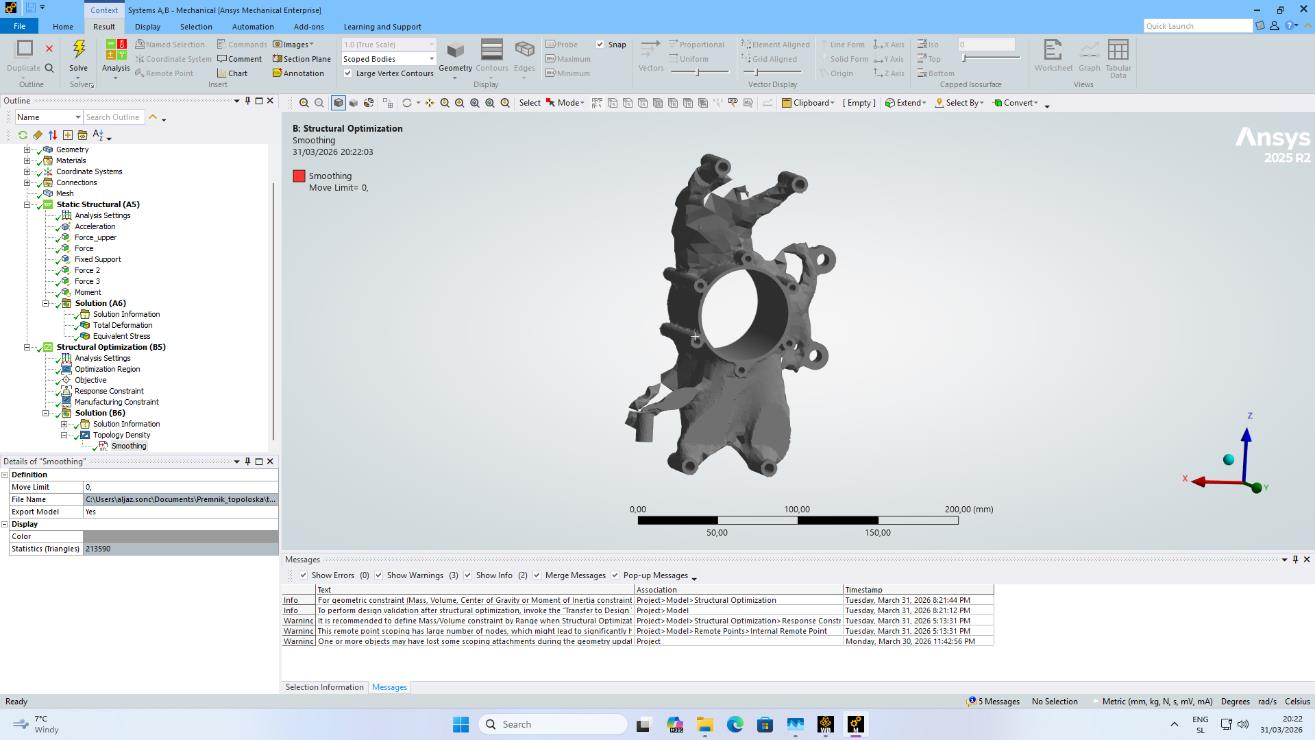
Using Ansys Mechanical, the GPE team combined static structural analysis and topology optimization to identify critical load paths and opportunities for material removal.
The simulation results guided the redesign of an upright that maintained the necessary structural interfaces while remaining suitable for CNC milling.
The resulting component was successfully manufactured, demonstrating how simulation can support lightweight and practical engineering solutions.
From Engineering Simulation to Formula Student Competition
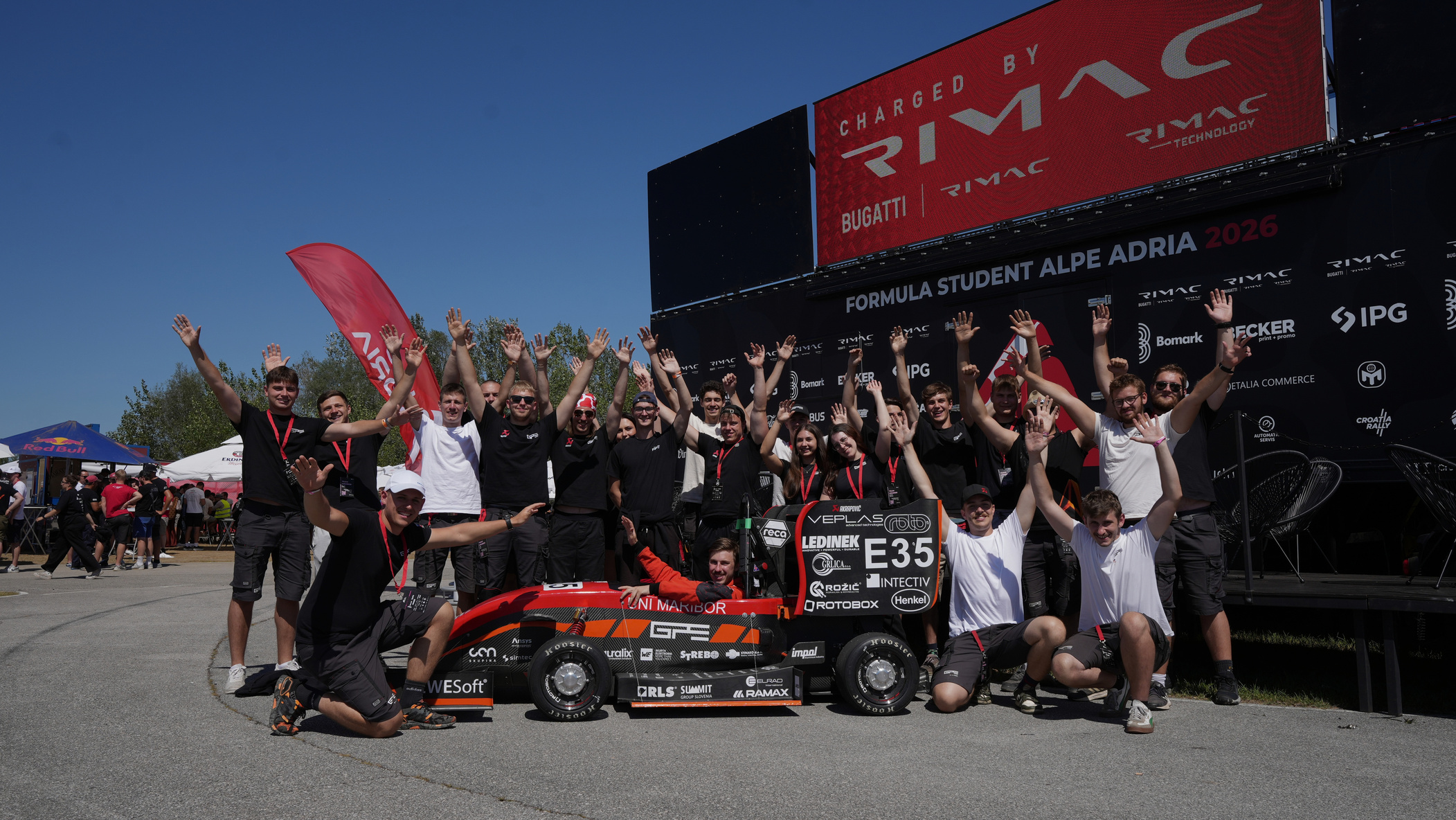
The GPE26 season represented a major milestone for the team, successfully completing every competition discipline and both endurance races.
-
Formula Student Alpe Adria: 15th overall, 344.7 points.
-
Formula Student Poland: 13th overall, 192.40 points.
Beyond the competition results, the team established a validated aerodynamic CFD workflow, introduced adjoint-based optimization, evaluated motor thermal performance, and translated structural simulation results into a manufactured suspension component.
The Team's Experience with Ansys and Simtec
"Rebuilding our CFD workflow in Ansys Fluent gave us simulations we can actually base decisions on - our predictions now match track measurements far better than before. The adjoint solver then took us a step further: instead of guessing which shape to try next, it showed us exactly where the underbody needed to change."
Enej Planinšek
Technical Leader, UNI Maribor Grand Prix Engineering
The team also highlighted the importance of Simtec's contribution:
"The support from Simtec is what makes this accessible to a student team. Access to the software and to technical guidance means our members learn tools that are used in industry, on a real vehicle with real deadlines, and we would recommend both Ansys and Simtec to any student engineering team."
UNI Maribor Grand Prix Engineering
Looking Ahead: Building on Simulation-Driven Engineering
The team plans to integrate the optimized underbody geometry into its next-generation vehicle, extend adjoint optimization to additional aerodynamic components, and validate cornering simulations through track testing.
At Simtec, we are proud to support UNI Maribor Grand Prix Engineering through our Student Teams program, helping future engineers gain practical experience with industry-leading Ansys technology.
Discover how Simtec empowers university teams through the Ansys Academic Program, combining advanced simulation software with technical expertise and support.